


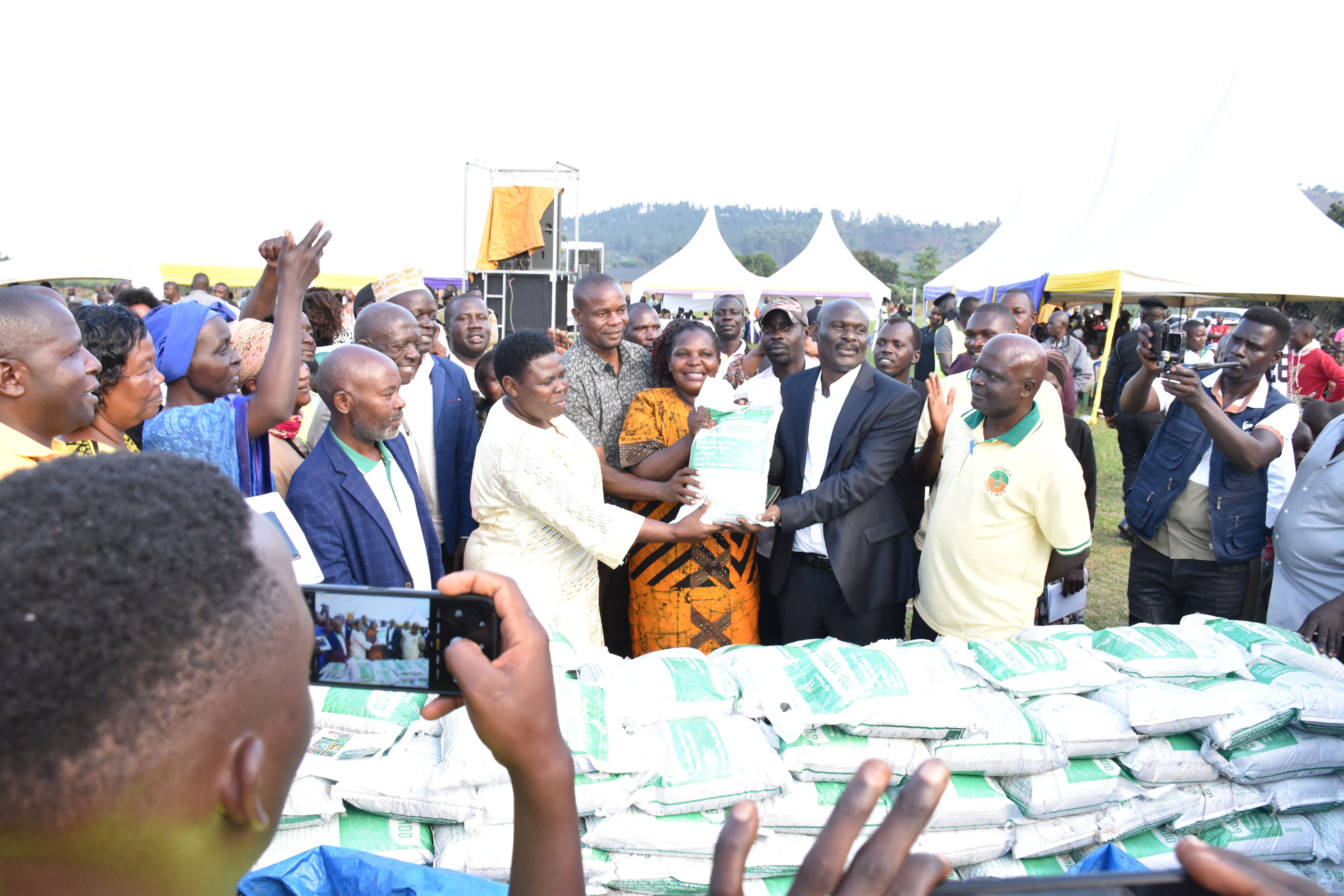
The Rose Namayanja Foundation and the Basajjassubi Development Initiative have joined efforts to strengthen the implementation of the Parish Development Model (PDM) in Nakaseke South by supporting Practical Training Centres with agricultural inputs and equipment.
The initiative is aimed at ensuring that PDM beneficiaries acquire practical skills in selected enterprises before receiving and investing their funds. The support included coffee seedlings, banana suckers, piglets and management tools for Practical Training Centres established in the different parishes.
Speaking during the handover, the Founder and Director of the Rose Namayanja Foundation, Rt. Hon. Namayanja Rose, said the initiative was guided by the need to equip communities with practical skills before they access PDM financing.
“Before they receive the Parish Development Model money, let them first be trained.”
Namayanja explained that the communities in Nakaseke South had identified coffee farming, banana farming and piggery as priority enterprises. The Practical Training Centres were established to allow beneficiaries to learn directly from people already engaged in the selected enterprises.
“They didn’t have seeds. They didn’t have stock. They didn’t have equipment or tools to use. So we have come with the coffee seedlings, we have given them banana suckers, we have given them management tools that they are going to use, but also piglets.”
According to Namayanja, the practical approach will help future beneficiaries understand how to manage their enterprises and make better use of the PDM funds.
“We believe that the next cohorts of people in Nakaseke South that are going to receive PDM will go to the Practical Training Centres and learn firsthand with their hands and heads and know exactly what to do with the money that they are going to receive.”
She also pointed to the economic benefits of communities concentrating on similar enterprises, saying this would make it easier for farmers to aggregate their produce, access larger markets and eventually pursue value addition.
The intervention also comes with a broader call for communities to move from political mobilisation to household wealth creation.
NRM Electoral Commission Commissioner Amb. James Kinobe said the political phase had passed and that the focus should now be on improving the economic wellbeing of households.
“The phase of campaigning and politics is over. The next phase of the struggle is to mobilise for wealth in our own pockets.”
Kinobe said government had provided infrastructure and programmes to support development, but individuals must also take responsibility for engaging in productive activities.
“Money is earned, money is not got. So you must be either selling something or you must be doing something to get money.”
He commended the Rose Namayanja Foundation and the Basajjassubi Development Initiative for complementing government efforts by bringing communities together for training, sharing experiences and practical enterprise development.
The Founder and Director of the Basajjassubi Development Initiative, Hon. Charles Nsereko Kawuma Basajja Ssubi, called on residents to put aside political differences and work together to improve their communities.
He urged residents to take advantage of government programmes and engage in income-generating activities that can improve household incomes and help families move out of poverty.
The Rose Namayanja Foundation and the Basajjassubi Development Initiative remain committed to supporting communities to build sustainable livelihoods and make productive use of available government programmes.
The organisations recognise that sustainable community transformation requires collaboration among government, development partners, private-sector actors, civil society and other stakeholders. They therefore welcome partnerships that can expand practical training, provide agricultural inputs and equipment, support enterprise development and create access to markets for beneficiaries.
Through stronger partnerships and continued community engagement, the organisations hope to reach more households and create more opportunities for people to acquire skills, grow productive enterprises and improve their incomes.
